
Understanding Craniocervical Instability (CCI)
Craniocervical Instability (CCI) refers to excessive movement or abnormal instability between the skull and upper cervical spine (neck). When the ligaments supporting this area become weakened or damaged, the neck may lose stability, potentially affecting surrounding nerves, blood flow, and normal function.
There are many possible causes of CCI including:
-
- Previous Whiplash or Motor Vehicle Accidents
- Concussions or Head Trauma
- Sports Injuries
- Ligament Injuries
- Hypermobility/Connective Tissue Disorders
- Repetitive Strain Over Time
CCI has been associated with a wide range of symptoms including:
-
- Chronic Neck Pain or Stiffness
- Headaches or Migraines
- Dizziness or Vertigo
- Brain Fog or Difficulty Concentrating
- Balance Issues
- Visual Disturbances
- Numbness or Tingling
- Fatigue
- Symptoms that Worsen with Certain Head Positions
- Feeling Unstable or “Off” when Moving the Neck
Symptoms can vary widely and may overlap with other conditions, which can make diagnosis challenging. Having these symptoms does not mean that you have CCI, and a Dynamic Motion X-Ray (DMX) Study could rule that out and better direct your care and healing.
What Is Dynamic Motion X-Ray (DMX)?
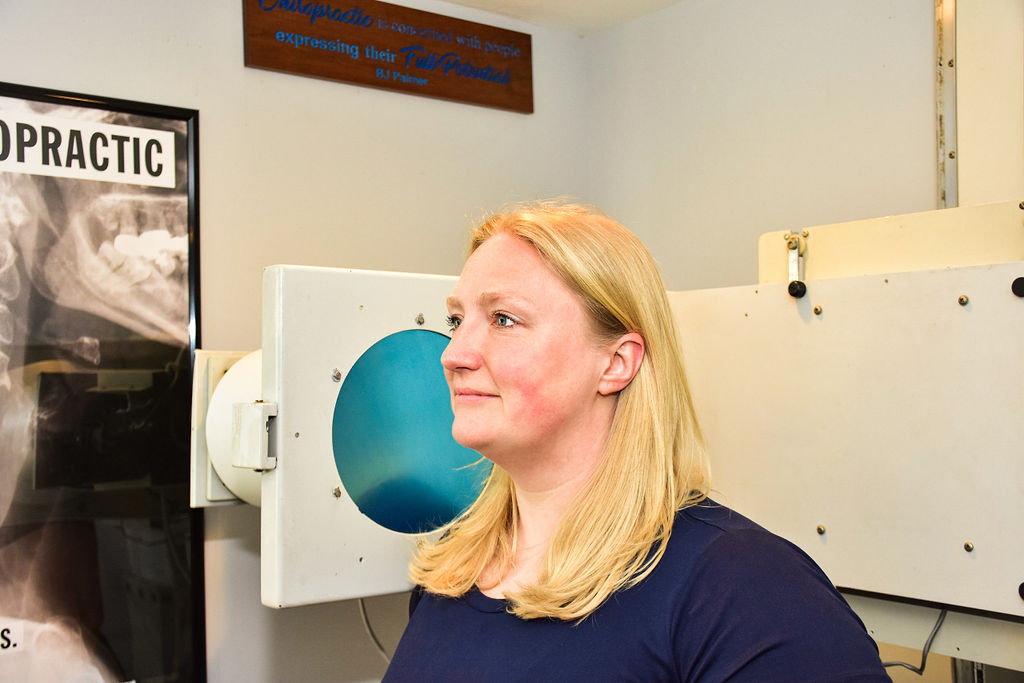
Dynamic Motion X-Ray (DMX) is a form of real-time fluoroscopic imaging that evaluates spinal movement through ranges of motion.
Instead of a single snapshot, DMX records how structures move while the neck changes position.
This can help identify:
-
- Excessive motion patterns
- Altered movement between vertebrae
- Potential ligament-related instability patterns
- Functional abnormalities not visible on static imaging
DMX findings should always be interpreted alongside symptoms, history, physical examination, and other diagnostic information. It is one helpful piece of the puzzle, supplying information that can be used to make informed, effective decision in individualized patient care.
DMX Shows What Standard Static X-Rays May Miss
Traditional imaging like static X-rays, CT scans, or MRIs often captures the neck in one position only. If symptoms occur primarily during movement, abnormalities or motion restrictions may not always be apparent on static imaging.
Dynamic Motion X-Ray can help identify abnormal cervical motion patterns associated with instability, including findings that warrant further evaluation. However, DMX alone does not confirm or rule out every case of craniocervical instability, and diagnosis requires comprehensive clinical assessment.
Our goal is to use advanced imaging tools when appropriate to better understand whether abnormal cervical motion may be contributing to your symptoms.
Who Might Consider an Evaluation?
You may benefit from further assessment if you have ongoing symptoms following:
✓ Car Accidents or Whiplash
✓ Sports Injuries
✓ Concussions
✓ Chronic Unexplained Dizziness or Headaches
✓ Persistent Neck Pain
✓ Symptoms Worsened by Head Movement
Our Approach
Every patient’s situation is unique. At Turo Family Chiropractic, we take a comprehensive approach by considering:
-
- Health History
- Symptom Patterns
- Functional Examination
- Imaging when Clinically Appropriate
- Personalized Recommendations
Frequently Asked Questions
Is DMX Painful?
No – DMX imaging is non-invasive and involves guided neck movement during imaging. Any pain or discomfort that you typically experience when moving your head/neck can be expected but no additional stresses. Additionally, our team is always prepared to help make your experience as comfortable as possible throughout the process – just ask!
Does Abnormal Movement Always Mean CCI?
Not necessarily. Abnormal movements, motion restrictions, and other challenges may not be related to CCI but subluxations (misalignments or motion-restricted segments) in the spine. All findings must be interpreted in context; the doctor will review all of the available information to aid in diagnosis and recommend next steps in possible care.
Can DMX Replace MRI?
No. Different imaging tools evaluate different aspects of structure and function. An MRI is exceptionally good at displaying soft tissues (like the brain, muscles, and organs). A Dynamic Motion X-Ray shows the movement – or lack of movement – of bones and joints. A DMX is helpful for identifying hidden, chronic issues such as Joint and Spinal Instability, Ligament Damage, and Dynamic Pain Sources. This makes DMX an ideal tool for identifying CCI.

Schedule Your Dynamic Motion X-Ray Analysis
Wondering whether abnormal cervical motion could be contributing to your symptoms? Schedule an evaluation to discuss whether further assessment, including Dynamic Motion X-Ray, may be appropriate for you.
What If It Isn’t CCI?
There is also the possiblity that CCI is not the cause of your symptoms. The DMX Study can help diagnose or rule out CCI – but that’s not the only information that can be gained through this analysis. Another cause of symptoms could be a spinal subluxation (a misalignment or improperly moving segment). A subluxation causes nerve interference and can lead to a number of symptoms – including those seen with CCI. If a subluxation is found, it may very well be the source of symptoms and addressing it could be the solution that you are looking for. Our doctors are specially trained to locate, analyze and correct spinal subluxations and are always happy to discuss how addressing subluxations can reduce or eliminate symptoms and improve overall health.
Based on the results of your DMX Study, the doctors will be able to make recommendations as to next possible steps for your care and what options you have available. The first step is obtaining as much information as we can so that you can make the most informed decisions for your health.